
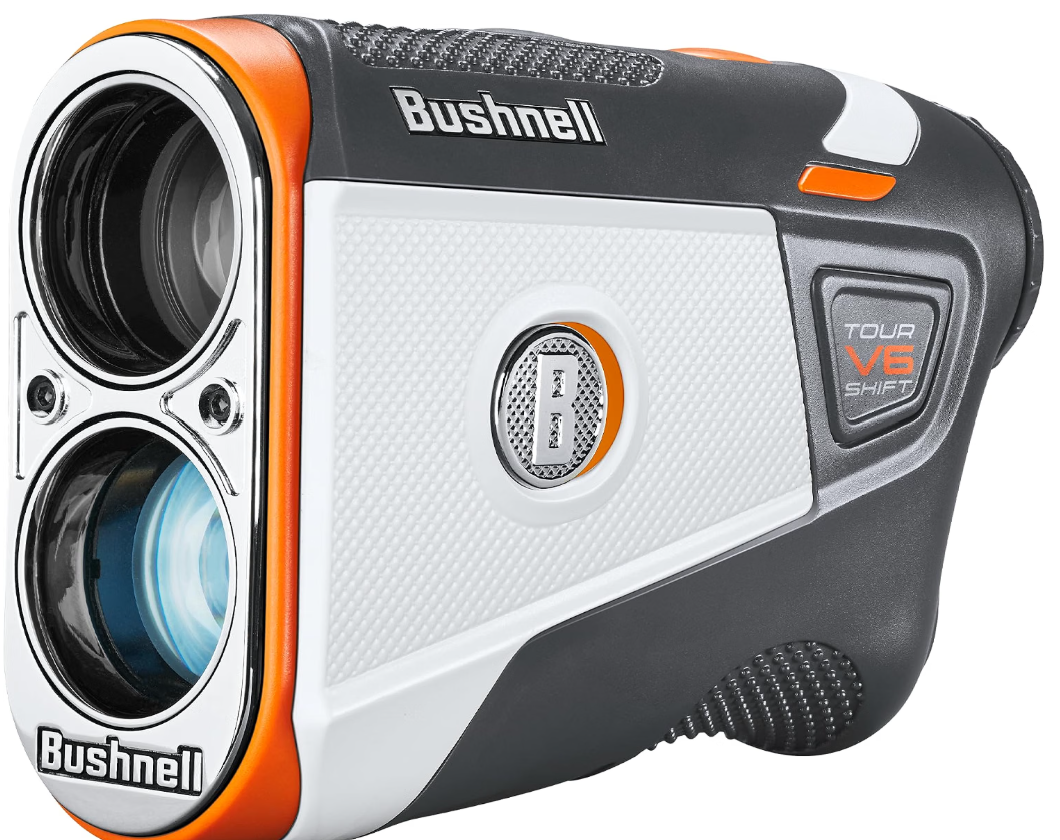
The best golf rangefinders for beginners offer easy operation, accurate distance measurements, clear displays, and useful features such as slope compensation, flag locking, and vibration alerts. These functions help new golfers understand distances, select suitable clubs, and make better decisions when planning their shots.
In this guide, I will review some of the best golf rangefinders for beginners, highlighting their key features, advantages, and disadvantages. I will also cover the important factors to consider before buying, the benefits of using a golf rangefinder, and frequently asked questions to help you choose the right model for your needs.
Best Golf Rangefinder for Beginners
1.REDTIGER Golf Rangefinder
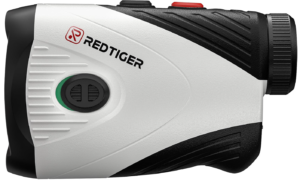
The REDTIGER Golf Rangefinder is an excellent choice for beginners looking for an affordable, accurate, and easy to use golf rangefinder. It offers several useful features that help golfers measure distances and make better decisions on the course.
With a maximum measuring range of 1,200 yards, 7x magnification, slope compensation, and flag locking technology, it provides the essential functions needed by golfers who want to improve their game. Its rechargeable battery and magnetic attachment also make it convenient for regular practice and golfing sessions.
One of the main features of the REDTIGER Golf Rangefinder is its accurate distance measurement. It measures distances from 5 to 1,200 yards with an accuracy of 0.5 yards. This allows beginners to obtain reliable distance readings when measuring how far they are from the flag or other targets.
It supports both yards and meters, giving users the flexibility to select their preferred measurement unit. The 7x magnification makes distant targets easier to view, while the transflective LCD display provides clear readings for quick reference during play.
The REDTIGER Golf Rangefinder also comes with six measurement modes designed to support different golfing situations. These include slope compensation, golf flag locking, horizontal and height ranging, speed measurement, and continuous scan measurement.
The slope compensation function calculates adjusted distances by considering changes in elevation, helping golfers understand the distance they need to cover. The flag locking mode helps identify the golf flag, making it easier to obtain distance readings.
These functions are particularly useful for beginners who are still learning how to judge distances and select suitable clubs.
Another useful feature is the slope switching function. Golfers can turn off slope compensation when playing in competitions where slope measuring functions are not permitted. This makes the REDTIGER a flexible option for both practice and competitive golf. However, golfers should always confirm that the device meets the applicable competition rules before using it in a tournament.
Portability is another reason this model is suitable for beginners. It features a magnetic attachment that allows golfers to conveniently attach the rangefinder to metal surfaces such as golf carts and clubs. It also comes with a magnetic belt clip that can be attached to a golf bag or belt for easy carrying.
The IP54 water-resistant rating provides protection against dust and water splashes, making it suitable for outdoor golfing conditions. However, it should not be submerged in water or exposed to heavy rain.
The rechargeable battery is another convenient addition. The REDTIGER Golf Rangefinder supports USB-C charging with a 5V/2A output and is rated for up to 30,000 measurements. This reduces the need for frequent battery replacements and makes it suitable for golfers who practise regularly.
The manufacturer also provides two-year assurance and lifetime technical support, giving buyers additional confidence when choosing this rangefinder.
Overall, I would recommend the REDTIGER Golf Rangefinder to beginners who want an accurate and versatile device without investing in a complicated golf measuring system. Its multiple measurement modes, slope switching, clear display, magnetic attachment, and rechargeable battery make it a practical choice for learning the game and improving distance management.
Pros
-
Measures distances from 5 to 1,200 yards.
-
Provides accurate measurements within 0.5 yards.
-
Features 7x magnification for viewing distant targets.
-
Offers six measurement modes for different golfing needs.
-
Includes slope compensation for elevation-adjusted distance readings.
-
Slope switching allows golfers to disable the function for competitions where required.
-
Magnetic attachment makes it convenient to secure to golf carts.
-
USB-C rechargeable battery reduces the need for battery replacements.
-
IP54 water-resistant rating provides protection against dust and splashes.
-
Includes two-year assurance and lifetime technical support.
Cons
- Requires regular charging to remain ready for use.
2.REVASRI Golf Rangefinder
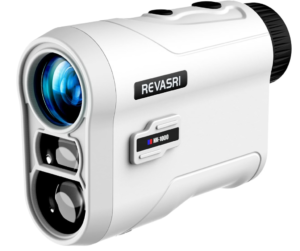 The REVASRI Rangefinder is a good choice for beginners looking for a cost-effective, lightweight, and easy to use golf rangefinder. It combines essential golfing features such as slope compensation, flagpole locking, vibration alerts, and quick distance measurement.
With a maximum measuring range of 1,000 yards and an accuracy of ±1 yard, it helps golfers obtain reliable distance readings when playing or practising. Its simple controls also make it suitable for beginners who want to improve their distance judgement without dealing with complicated settings.
One of the useful features of the REVASRI Rangefinder is its fast and accurate measurement capability. It measures distances up to 1,000 yards with an accuracy of ±1 yard and provides readings in approximately 0.5 seconds. This allows golfers to quickly determine the distance to the flagpole and other targets before selecting a club.
It also supports measurements in both meters and yards, making it convenient for users with different measurement preferences. The built-in low battery indicator helps golfers monitor the remaining power and know when the device needs charging.
The REVASRI Rangefinder also features slope compensation and pin locking with vibration alerts. When the golf flag overlaps with the background, users can press and hold the measurement button to scan the target. Once the device recognizes and locks onto the flag, it provides a vibration alert to confirm the measurement.
When slope mode is enabled, the display shows the angle, line-of-sight distance, and recommended golf compensation distance. This helps beginners understand how elevation changes affect the distance they need to cover and make better club selections.
Another useful feature is its external slope switch, which allows golfers to turn off slope compensation when playing in tournaments. In this mode, the angle value and adjusted distance are no longer displayed, while flag locking and vibration functions remain available.
The device displays only the straight-line distance to the target. This makes it suitable for golfers who want to use the same rangefinder for practice and competitions, subject to applicable tournament rules.
Ease of use is another advantage of the REVASRI Rangefinder. It features two simple buttons, one for measuring distances and another for changing between meters and yards. Its compact size of 3.8 × 2.6 × 1.3 inches and lightweight design of 4.3 ounces make it easy to carry around the golf course. The fully multilayer-coated lens improves light transmission and reduces reflected light, helping users enjoy a clearer view when identifying distant targets.
The REVASRI Rangefinder also comes with a built-in rechargeable lithium-ion battery, making it convenient for regular golfing sessions. It includes a USB-C charging cable, a carrying pouch with a carabiner, a lens cleaning cloth, and a user manual. The pouch makes it easier to protect and carry the device, while the cleaning cloth helps maintain clear lenses for accurate viewing.
Overall, I would recommend the REVASRI Rangefinder to beginners who want a simple, portable, and affordable golf distance measuring device.
Its quick measurements, slope compensation, flag locking vibration alerts, and tournament mode provide useful functions without making the device difficult to operate. It is a practical option for golfers who want to develop their distance management skills and gain more confidence on the course.
Pros
-
Measures distances up to 1,000 yards.
-
Provides measurement accuracy of ±1 yard.
-
Offers quick measurements in approximately 0.5 seconds.
-
Includes slope compensation for elevation-adjusted distance readings.
-
Features flagpole locking with vibration alerts.
-
External slope switch allows golfers to disable slope compensation for tournaments.
-
Simple two-button operation makes it beginner-friendly.
-
Supports measurements in meters and yards.
-
Lightweight and compact for easy transportation.
-
Includes a rechargeable lithium-ion battery.
-
Comes with a carrying pouch, USB-C cable, and lens cleaning cloth.
Cons
- Beginners may need time to understand the slope compensation readings.
3.Acer Golf Rangefinder
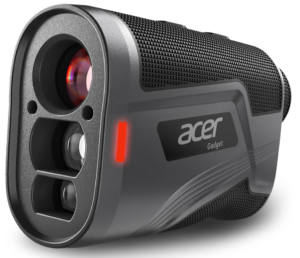
The Acer Golf Rangefinder is a great option for beginners looking for an accurate, easy to use, and reliable golf distance measuring device. It combines useful features such as anti-shake technology, slope compensation, flagpole locking, and vibration alerts to help golfers obtain accurate distance readings.
With a maximum measuring range of 800 yards, 6x magnification, and an accuracy of ±0.5 yards, it provides the essential functions needed to improve distance judgement and make better decisions on the golf course. Its rechargeable battery and simple controls also make it a convenient choice for regular golfing sessions.
One of the features that makes the Acer Golf Rangefinder suitable for beginners is its anti-shake technology. This technology helps reduce movement when measuring distances, providing more stable and reliable readings even when users have unsteady hands.
This is particularly helpful when trying to lock onto a distant golf flag or other targets. The rangefinder also offers a measurement range of up to 800 yards with an accuracy of ±0.5 yards. Its 6x magnification makes distant objects easier to view, while the bright LCD display provides clear readings for quick reference during play.
The Acer Golf Rangefinder also offers six measurement modes to support different golfing needs. These include slope compensation, vertical and horizontal distance measurement, angle measurement, speed measurement, and continuous scanning. Users can switch between the different functions using the M button.
The slope compensation mode considers elevation changes and provides adjusted distance readings to help golfers choose suitable clubs. These functions are useful for beginners who want to understand distances better and improve their performance on different types of golf courses.
Another useful feature is its flagpole locking technology with vibration alerts. This function helps golfers identify and lock onto the flagstick, even when there are other objects in the background. Once the target is identified, the rangefinder provides a vibration alert to confirm the measurement.
This gives beginners greater confidence when measuring distances, especially on windy courses where keeping the device steady can be challenging. It also helps reduce confusion when trying to identify the correct target.
Battery performance is another important consideration when choosing a golf rangefinder. The Acer model comes with a rechargeable battery that supports USB-C charging. This eliminates the need for frequent battery replacements and makes it convenient for golfers who spend several hours practising or playing on the course. Users can recharge the device when necessary, ensuring it is ready for their next golfing session.
Overall, I would recommend the Acer Golf Rangefinder to beginners who want a reliable and versatile device for improving their distance measurements. Its anti-shake technology, 800-yard measuring range, 6x magnification, slope compensation, and flagpole locking function make it a practical choice.
The rechargeable battery and multiple measurement modes also provide good convenience for golfers who want useful features without complicated operation.
Pros
-
Measures distances up to 800 yards.
-
Provides accurate readings within ±0.5 yards.
-
Anti-shake technology helps deliver stable measurements.
-
Features 6x magnification for viewing distant targets.
-
Bright LCD display makes readings easier to see.
-
Offers six measurement modes for different needs.
-
Includes slope compensation for elevation-adjusted distance readings.
-
Flagpole locking with vibration alerts confirms target measurements.
-
USB-C rechargeable battery eliminates the need for disposable batteries.
-
Simple M button operation makes switching between functions convenient.
Cons
- The 800-yard measuring range may be more than some beginner golfers require.
4.Bushnell Golf Rangefinder
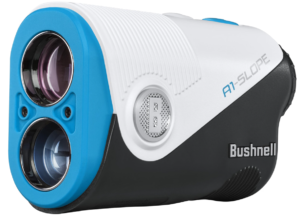
The Bushnell A1-Slope Golf Rangefinder is an excellent option for beginners looking for a compact, accurate, and reliable device to improve their distance measurements on the golf course. It combines advanced features such as patented slope technology, 6x magnification, PinSeeker with JOLT vibration, and a magnetic cart mount.
With a total measuring range of up to 1,300 yards and accuracy within 1 yard when measuring flags between 1 and 350 yards, it provides useful performance for golfers who want to make better decisions when selecting clubs. Its small design also makes it convenient to carry during practice and regular golf rounds.
One of the main advantages of the Bushnell A1-Slope Rangefinder is its patented slope technology. This feature calculates adjusted distances by considering elevation changes on the golf course.
It measures uphill and downhill shots to provide a more accurate recommended playing distance, helping beginners understand how slopes affect their shots. This is particularly useful when playing on courses with uneven terrain. Bushnell also states that its slope technology is trusted by 98.6% of PGA Tour professionals, demonstrating the brand’s reputation among experienced golfers.
The rangefinder also features 6x magnification, making it easier to view distant objects and identify the golf flag. It provides accurate measurements within 1 yard for flag distances between 1 and 350 yards, while its total measuring range extends up to 1,300 yards.
These capabilities help golfers obtain reliable distance readings before choosing a club. For beginners, having clear and accurate measurements can make it easier to understand the course and develop better distance management skills.
Another useful feature is Pin Seeker with JOLT technology. This function helps golfers lock onto the flagstick even when there are other objects in the background. Once the device successfully identifies the flag, it produces a short vibration to confirm the measurement.
This gives users confidence that they are measuring the correct target rather than trees or other objects behind the green. It is particularly helpful for beginners who may find it difficult to identify and measure the flag accurately.
The Bushnell A1-Slope Rangefinder is also designed for golfers who participate in competitions. It allows users to switch slope mode on or off using the mode button. When slope mode is disabled, golfers can use the device for tournament play where slope functions are not permitted, subject to the applicable competition rules. This flexibility makes it suitable for both practice sessions and competitive golfing.
Portability is another advantage of this model. It is the smallest Bushnell Golf laser rangefinder ever built, offering a compact design that fits easily into a pocket or golf bag. It also includes a BITE magnetic skin that allows users to attach the device securely to metal golf cart bars for convenient access between shots. This reduces the need to keep taking the rangefinder out of its carrying case during play.
Battery performance is another important consideration, and the Bushnell A1-Slope Rangefinder offers a rechargeable battery that lasts for more than 50 rounds. It uses USB-C charging, making it convenient to recharge when needed.
The package also includes a premium carrying case, magnetic skin, USB-C charging cord, washable microfiber cleaning cloth, and quick start guide. These accessories provide everything beginners need to start using and maintaining the device.
Overall, I would recommend the Bushnell A1-Slope Golf Rangefinder to beginners who want a compact and dependable device with advanced distance measurement features. Its slope technology, 6x magnification, PinSeeker with JOLT, magnetic cart mount, and rechargeable battery make it a practical choice for improving accuracy and confidence on the golf course.
Pros
-
Compact and lightweight design makes it easy to carry.
-
Measures total distances up to 1,300 yards.
-
Provides accuracy within 1 yard for flag distances between 1 and 350 yards.
-
Features 6x magnification for viewing distant targets.
-
Patented slope technology adjusts distances for uphill and downhill shots.
-
PinSeeker with JOLT provides vibration confirmation when the flag is locked.
-
Slope mode can be switched off for tournament play where required.
-
BITE magnetic skin allows convenient attachment to golf carts.
-
Rechargeable battery lasts for more than 50 rounds.
-
Includes a carrying case, USB-C charging cord, and cleaning cloth.
Cons
- The compact size may make it easier to misplace if not stored carefully.
5.Callaway 300 Pro Golf Laser Rangefinder
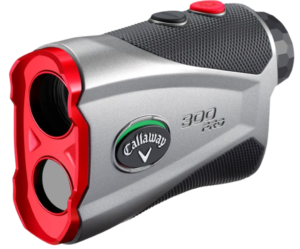
The Callaway 300 Pro Golf Laser Rangefinder is an excellent choice for beginners looking for an accurate, reliable, and easy to use device to improve their golfing experience. It combines useful features such as slope measurement, 6x magnification, pin acquisition technology, and a built-in magnetic cart mount.
With a measuring range of 5 to 1,000 yards and an accuracy of ±1 yard, it helps golfers obtain reliable distance readings before selecting their clubs. Its simple operation and practical design make it suitable for beginners who want to develop better distance judgement and confidence on the golf course.
One of the main features of the Callaway 300 Pro is its precise slope measurement technology. This function measures the angle of incline or decline and calculates the slope-adjusted distance to the target.
It helps golfers understand how elevation changes affect the distance of their shots, making it easier to select the appropriate club. This is particularly useful for beginners playing on courses with hills and uneven terrain.
The slope function can also be switched on or off using the external switch, allowing golfers to disable it when playing in tournaments where slope measurement is not permitted.
The Callaway 300 Pro also provides excellent magnification and distance measurement capabilities. It features 6x magnification, which makes it easier to identify distant targets and measure their distances accurately.
The device measures distances from 5 to 1,000 yards with an accuracy of ±1 yard. It also supports both yards and meters, allowing golfers to choose their preferred measurement unit. These features help beginners obtain clear distance readings and make more informed decisions when selecting clubs.
Another useful feature is the Pin Acquisition Technology (P.A.T.), which helps golfers lock onto the flagstick from distances of up to 300 yards. This technology makes it easier to identify the flag when there are trees or other objects in the background.
Once the device locks onto the pin, its Pulse feature produces a short vibration to confirm the measurement. This gives beginners greater confidence that they have measured the correct target, helping them avoid relying on guesswork when planning their shots.
The Callaway 300 Pro is also designed with convenience in mind. It features a strong integrated Magna hold magnet that allows golfers to attach the rangefinder securely to the frame of a golf cart.
This makes it easy to access the device between shots without repeatedly taking it out of its carrying case. It also comes with a premium moulded hard carrying case, a carabiner, and an elastic quick-close band. These accessories help protect the rangefinder and make it easier to carry around the course.
Overall, I would recommend the Callaway 300 Pro Golf Laser Rangefinder to beginners who want an accurate and dependable device with useful features for improving their game. Its slope measurement technology, 6x magnification, pin locking function, vibration confirmation, and magnetic cart mount make it a practical choice for both practice and regular golf rounds.
It offers a good combination of accuracy, convenience, and ease of use for golfers who want to improve their distance management skills.
Pros
-
Measures distances from 5 to 1,000 yards.
-
Provides accurate readings within ±1 yard.
-
Features 6x magnification for viewing distant targets.
-
Slope measurement calculates adjusted distances based on elevation changes.
-
External slope switch allows the function to be disabled for tournament play where required.
-
Pin Acquisition Technology locks onto flags up to 300 yards away.
-
Pulse vibration confirms when the flag has been successfully identified.
-
Strong integrated magnet allows attachment to golf cart frames.
-
Supports measurements in both yards and meters.
-
Includes a premium hard carrying case with a carabiner and quick-close band.
Cons
- Pin locking is limited to distances of up to 300 yards.
You can further read:5 Best Hunting Rangefinder for the Money
Factors to Consider When Choosing the Best Golf Rangefinder for Beginners
Here are the most important considerations:
1. Accuracy and Measuring Range
Accuracy is one of the most important factors when choosing a golf rangefinder. Beginners need a device that provides reliable distance readings to help them make better decisions when selecting clubs and planning shots. Look for a rangefinder with an accuracy of approximately ±1 yard or better.
The measuring range is also important because it determines how far the device can identify and measure targets. A rangefinder with a range of 800 to 1,000 yards is generally sufficient for most golfing needs, although the distance at which it can accurately lock onto a flag is equally important.
2. Slope Measurement Technology
Slope measurement is a useful feature that helps golfers understand how elevation changes affect their shots. It calculates adjusted distances by considering whether the target is uphill or downhill. This allows beginners to make better club selections instead of relying only on the straight-line distance.
When choosing a rangefinder, consider one with a slope compensation function that can be switched on and off. This gives you the flexibility to use adjusted distances during practice and disable the feature when playing in competitions where slope functions are not permitted.
3. Magnification and Display Quality
Magnification determines how clearly golfers can view distant targets through the rangefinder. A model with 6x magnification is a good option for beginners because it makes it easier to identify flags and other objects on the course.
Display quality is equally important because distance readings should be easy to see and understand. Look for a rangefinder with a clear LCD display that provides visible measurements under different lighting conditions. A good display helps reduce confusion and allows golfers to concentrate on their game.
4. Flag Locking and Vibration Technology
Flag locking technology helps golfers identify the flagstick and measure its distance without confusing it with trees or other objects in the background. Some rangefinders also include vibration alerts that confirm when the device has successfully locked onto the flag.
This feature is particularly useful for beginners who may find it difficult to identify the correct target when measuring distances. A rangefinder with reliable flag locking and vibration confirmation can improve confidence and make distance measurements easier.
5. Ease of Use and Measurement Modes
Beginners should choose a golf rangefinder that is simple to operate and does not require complicated settings. Basic controls, clear buttons, and easy switching between measurement units make the device more convenient.
Some models offer additional functions such as horizontal and vertical distance measurement, angle measurement, speed measurement, and continuous scanning. While these features can be useful, it is important to choose a model that provides the functions you need without making operation unnecessarily difficult.
6. Battery Life and Charging Options
Battery performance is another important factor to consider when purchasing a golf rangefinder. A device with a reliable battery should last through several rounds of golf without requiring frequent charging or replacement.
Some models use replaceable batteries, while others feature rechargeable lithium-ion batteries with USB-C charging. Rechargeable options can be more convenient because they reduce the need to purchase replacement batteries. Check the expected battery life and charging requirements to ensure the device can support your regular golfing activities.
7. Size, Weight, and Portability
A good golf rangefinder should be lightweight, compact, and easy to carry around the course. Beginners spend considerable time moving between shots, so a bulky device may become inconvenient.
Consider a model that fits comfortably in your hand, pocket, or golf bag. Additional accessories such as carrying pouches, belt clips, and carabiners can make transportation easier. Magnetic attachments are also useful because they allow golfers to secure the rangefinder to metal golf cart surfaces for quick access during play.
8. Durability and Weather Resistance
Golf is an outdoor activity, meaning your rangefinder should be able to withstand regular use and changing weather conditions. Consider a model with a durable exterior and some level of water and dust resistance to protect it from light rain, splashes, and outdoor conditions.
The quality of the lens and body construction also matters because the device may be carried around in a golf bag alongside other equipment. Additionally, check the manufacturer’s warranty and availability of customer support. A durable rangefinder with reliable after-sales service can provide better long-term value.
Advantages of Using a Golf Rangefinder for Beginners
1. Improves Distance Accuracy
One of the biggest advantages of using a golf rangefinder is its ability to provide accurate distance measurements. Beginners often struggle to estimate how far they are from the flag or other targets.
A rangefinder helps solve this problem by providing clear distance readings, allowing golfers to understand how far they need to hit the ball. This reduces guesswork and makes it easier to plan each shot.
2. Helps with Club Selection
Choosing the right golf club can be challenging for beginners, especially when they are still learning how far each club can hit the ball. A rangefinder provides distance information that helps golfers select a suitable club for each shot. By understanding the distance to the target, beginners can make better decisions and gradually learn the performance of their different clubs.
3. Improves Confidence on the Golf Course
Beginners may feel uncertain when deciding how to approach different shots. Having a rangefinder provides useful information that makes these decisions easier. Instead of guessing the distance, golfers can rely on measurements to plan their shots. This can reduce uncertainty, improve confidence, and make the overall golfing experience more enjoyable.
4. Helps Understand Elevation Changes
Some golf rangefinders include slope compensation technology, which adjusts distance measurements based on uphill and downhill conditions. This helps beginners understand how elevation affects the distance a golf ball needs to travel.
For example, an uphill shot may require a different club selection from a shot on level ground. Understanding these differences helps golfers make better decisions when playing on uneven courses.
5. Saves Time During Play
A rangefinder makes it easier to measure distances quickly without spending too much time estimating how far away the target is. Many models provide readings within seconds and include flag locking technology to identify the golf flag. This helps beginners prepare for their shots faster and maintain a better playing pace without unnecessarily delaying other golfers.
6. Helps Improve Golf Skills Through Practice
Using a rangefinder regularly can help beginners understand distances and develop better course management skills. By measuring different targets and comparing the readings with their actual shots, golfers can gradually learn how far they can hit the ball using different clubs. This knowledge helps them identify areas that need improvement and become more consistent with practice.
7. Makes It Easier to Identify the Flagstick
Some golf rangefinders feature flag locking technology that helps distinguish the flagstick from trees and other objects in the background. Certain models also provide vibration alerts when the flag has been successfully identified.
This is particularly helpful for beginners who may struggle to focus on small targets at a distance. It provides greater confidence that the displayed measurement relates to the correct target.
8. Improves Course Management
Golf involves more than hitting the ball towards the hole. Players must understand distances and make decisions about how to approach different sections of the course. A rangefinder provides information that helps beginners plan their shots, avoid unnecessary risks, and choose suitable landing areas. Over time, this can help them develop better course management skills and play more strategically.
9. Provides Convenience and Portability
Most modern golf rangefinders are compact and lightweight, making them easy to carry in a pocket or golf bag. Some models also feature magnetic attachments that allow them to be secured to golf carts for quick access.
Rechargeable batteries and simple controls add to their convenience, allowing beginners to use them during practice and regular golf rounds without much difficulty.
10. Supports Better Decision-Making
Accurate distance information allows beginners to make more informed decisions before taking a shot. They can consider the distance to the flag, elevation changes, and their own hitting ability before selecting a club. This reduces unnecessary guesswork and encourages golfers to approach each shot with a clear plan.
Frequently Asked Questions (FAQs)
1. What is the best golf rangefinder for beginners?
The best golf rangefinder for beginners is one that offers accurate distance measurements, simple controls, clear display readings, and useful features such as slope compensation and flag locking. A measuring accuracy of approximately ±1 yard and 6x magnification are good features to consider. The ideal choice should be easy to operate, lightweight, and affordable.
2. Are golf rangefinders worth it for beginners?
Yes, golf rangefinders are worth it for beginners because they help measure distances accurately and reduce guesswork when selecting clubs. They also help golfers understand elevation changes, plan their shots, and improve course management. Using a rangefinder regularly can make practice more productive and help beginners develop confidence on the golf course.
3. Is a slope rangefinder legal for tournament golf?
Yes, a slope rangefinder can be used in tournaments if its slope function is disabled and the device complies with the applicable competition rules. Many modern golf rangefinders have an external slope switch that allows golfers to turn off slope compensation when required. Always check the tournament’s local rules before using one.
Conclusion
Choosing the best golf rangefinder for beginners can make learning and playing golf easier and more enjoyable. The rangefinders reviewed offer useful features such as accurate distance measurements, slope compensation, flag locking technology, vibration alerts, and clear displays to help beginners make better decisions on the course.
Their simple controls, compact designs, and convenient battery options also make them suitable for regular practice and golfing sessions. Whether you are looking for affordability, portability, advanced measurement features, or ease of use, these rangefinders provide practical options to suit different needs and budgets.
Investing in a good golf rangefinder can help you improve distance judgement, choose the right clubs, build confidence, and develop better course management skills as you grow as a golfer.